


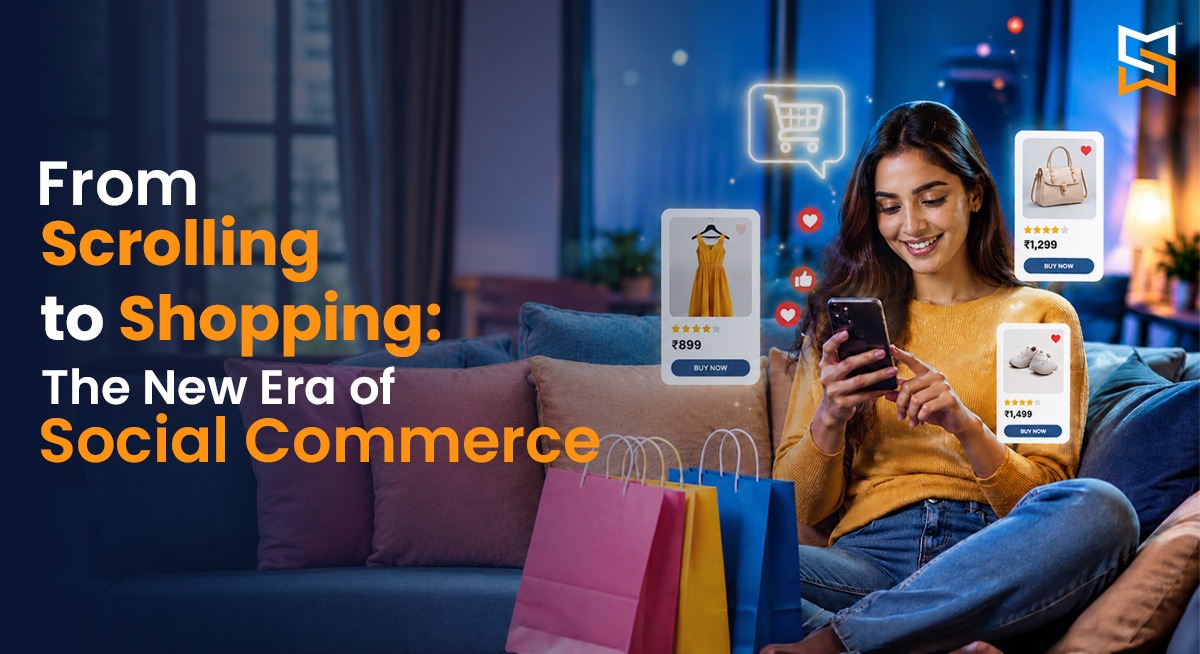
Social media is not just about sharing videos and connecting with friends, but a great way to communicate with your audience and build engagement. Today, it has become a massive sales hub where people discover products, interact with them, and buy products without even leaving the app. This evolution has made social commerce a popular, rapidly rising trend that is redefining the digital shopping experience.
Consumers prefer to use social media platforms for product discovery and inspiration. Social commerce is growing rapidly, so businesses are adopting social-first strategies to reach their customers and build strong engagement and interactions.
What Is Social Commerce?
Social commerce is the process of buying and selling products directly through social media platforms. It allows customers to shop directly within the social media apps, while traditional e-commerce redirects them to the brand’s website.
Convenience and engagement set social commerce apart from traditional e-commerce. It helps consumers to discover and purchase products by bringing content, commerce, and community into a seamless experience.
In this modern world, where consumers demand faster and personalised shopping experiences, social shopping has become a modern social media marketing strategy.
Why Social Commerce Is Thriving in the UAE?
Social commerce trends are changing as AI revolutionises everything. With its unique digital landscape, the UAE offers an ultimate ecosystem for social commerce growth. With exceptionally high smartphone penetration and widespread internet access, the country ranks among the world's leaders in social media usage.
According to some reports, the UAE's social commerce growth is fuelled by its highly connected population, with nearly 99% of residents using social media and spending close to three hours a day on social platforms.
With consumers in the UAE being highly tech-savvy and comfortable with online transactions, online shopping has become a usual part of their lifestyle. The rising popularity of online shopping, combined with a strong appetite for new technologies, has accelerated the adoption of social commerce across industries.
On top of that, the region’s booming e-commerce culture has prompted brands to seamlessly blend social selling strategies with their social media marketing efforts.
The Platforms Driving Social Commerce
Some social media platforms have a big hand in the social commerce boom in the UAE:
Instagram lets brands drive customer interest into purchases and turns a casual scroll into a quick purchase through their reels, stories, and Ads.
TikTok allows customers to discover products by converting passive scrolling into buying products.
Facebook Shops allow brands to showcase their products by building their own personalised storefronts for a seamless shopping experience.
Snapchat allows its audience to virtually experience products through its AR-powered feature.
Through WhatsApp Business, brands can chat directly with consumers and help them to make purchases while having the conversation.
These social media platforms are constantly upgrading their shopping tools to make social commerce a seamless experience for both businesses and customers.
How are UAE Consumers Shopping on Social Media?
Today, people are using social media platforms as product discovery tools. Short video content has become one of the most influential ways for showing products and inspiring purchases.
Moreover, social media platforms are today contributing beyond entertainment and information; they are a great medium to discover trending products and styles. In the UAE, a lot of primary discoveries are happening on Instagram, Snapchat, Facebook, etc.
The short videos and recommendations are influencing people online and helping brands to showcase their products. The beauty tutorials, fashion hauls, decor installations, all these engaging videos are gaining immense exposure online. They are enabling brands to interact, engage and connect with the audience and build trust as well.
The in-app shopping features allow consumers to move from discovery to buying in just a few tabs, making social shopping incredibly easy and engaging for consumers in the UAE. It is helping to provide a frictionless shopping experience while encouraging social commerce. It is allowing customers to find their interest-worthy brands without much effort. The conversion from interest to sales is also faster on social media. It only takes a few taps to check out and place the desired order.
The Power of Influencers in Social Commerce
Influencer marketing is another marketing method to improve sales and brand awareness. Influencers play a great role in the rapid growth of social commerce. They have built connections with their audiences that give them the power to influence the customer’s purchase decisions. When an influencer we love recommends something, it becomes more shoppable. While live shopping events recreate the buzz and bring the in-store vibe right to our screens.
In the UAE, local influencers can relate with the local audiences, as they’re culturally connected and have deeply engaged communities. With influencer-led marketing on the rise, brands are partnering more with relevant creators for Shoppable content to reach more audiences and build credibility.
Benefits of Social Commerce for Businesses
Social commerce can be a big game-changer for the brands that want to grow online.
It allows brands to gain visibility by showcasing their products online.
Brands can get higher engagement rates using interactive content formats such as posts, short-video content, stories, and live streams.
Social commerce makes customers’ shopping experience smooth by reducing the steps required to make a purchase.
It provides brands with clear customer insights that help them sharpen their marketing strategies and drive more sales.
Key Social Commerce Trends in the UAE
The evolution of online retail is driving through some social commerce trends in the UAE. Instead of generic suggestions, brands are leaning toward AI-powered product recommendations to serve hyper-relevant product recommendations that shoppers actually like. Live shopping is the game-changer, bringing the in-store vibe right to customers' screens to give interactive shopping experiences.
Video-first shopping content becomes the go-to way to product discovery, while social proof through reviews and creator recommendations remains a key purchasing factor. Easy mobile checkout experiences are also helping reduce cart abandonment, leading to more conversions.
Challenges Brands Need to Overcome
Social commerce has great potential, but it comes with challenges. The customer’s trust remains a roadblock, as they hesitate to make direct purchases on social media platforms.
To stand out in a crowded digital landscape where everyone is competing for brand visibility, brands must be very careful with their data privacy policies. It’s very important to meet customers’ expectations, as they expect quick responses and personalised support across all their social channels.
Strategies for Social Commerce Success
Brands should focus on Shoppable content to achieve social commerce success as their viewers capture attention quickly.
Partnering with relevant creators helps to introduce them to a whole new crowd and build credibility.
Brands should encourage their customers to create content for them, to build connections with more audiences.
Long-term success requires a seamless customer experience, guiding them from discovering a product to bringing it home.
The Future of Social Commerce in the UAE
In the UAE, social commerce has an incredible, exciting future ahead. The creator economy will continue to play a crucial role in purchasing decisions, and social platforms continue to bring better shopping features.
With tech like AI and augmented reality evolving, brands can easily enhance the shopping experience. Social media platforms, rather than traditional advertising venues, are rapidly evolving into one-stop shopping hubs where you can purchase without leaving the app.
Conclusion
In the UAE, social shopping is rapidly evolving from a retail trend into the future of online shopping. In the end, brands that lean into engaging visual content, influencer partnerships, and seamless checkout experiences will stand out amid growing competition. As Sociomark believes, combining data-driven social media marketing strategies with innovative social commerce solutions enables brands to create meaningful shopping experiences, strengthen customer engagement, and drive sustainable business growth in the evolving digital landscape.
FAQs
1. How can businesses measure the success of social commerce?
Track metrics like conversion rate, engagement, click-through rate (CTR), return on ad spend (ROAS), and average order value to evaluate the effectiveness of your social commerce strategy.
2. Which industries benefit the most from social commerce?
Fashion, beauty, electronics, home décor, food, and luxury brands benefit the most because their products perform well with visual and interactive content.
3. Why is user-generated content important in social commerce?
Customer reviews, photos, and videos build trust, improve credibility, and encourage more shoppers to make purchase decisions.
4. What makes shoppable content more effective?
High-quality visuals, product tags, clear calls-to-action, and a seamless checkout experience help increase engagement and conversions.
5. Why should brands adopt an omnichannel strategy for social commerce?
An omnichannel approach creates a consistent shopping experience across social media, websites, and stores, improving customer satisfaction and loyalty.
High-quality visuals, product tags, clear calls-to-action, and a seamless checkout experience help increase engagement and conversions.
An omnichannel approach creates a consistent shopping experience across social media, websites, and stores, improving customer satisfaction and loyalty.
For regular digital marketing tips & updates, follow Sociomark on Social Media:
Facebook – https://www.facebook.com/people/Sociomark-UAE/61577116324378/
Instagram – https://www.instagram.com/sociomarkae/
LinkedIn – https://www.linkedin.com/company/sociomark/
Expert Review: Heta Desai Baandal (Founder)